• About UGM
  • Academic Portal
  • IT Center
  • Library
  • LPPM
  • Email
  • English
    • Bahasa Indonesia
    • English
Universitas Gadjah Mada
  • Profile
    • At A Glance
    • Lecturer
    • Staff
  • Programs
    • Bachelor of Cultural Anthropology
      • Curriculum
      • Undergrad Thesis and Judicial Examinations
      • Admission
    • Master of Anthropology
      • Curriculum
      • Grad Thesis and Judicial Examination
      • Admission
    • Doctor of Anthropology
      • Curriculum
      • Admission
  • Research Publication & Literature
    • Cooperation
      • International
      • National
    • Research & Publication
      • Policy Brief
      • Plantation Life
    • Workshop & Community Services
    • Lembaran Antropologi
    • Laboratorium of Anthropology for Research and Action​
    • Library of Anthropology
  • Students
    • International Students
      • Application Process
      • Global Mobility Erasmus +
      • Credit Conversion Guide
    • Field Research Team
    • Student Workspace
    • Alumni
    • KEMANT
    • Career Vacancies
  • Accreditation
    • Appendix Acquin
    • National Accreditation
  • Contact
  • Home
  • Fieldwork Stories

The Banjar People and “Beje”: Resistance and Political-Ecological Relations between the Banjar Community and the Swamp Amidst Intense Land Conversion

  • Fieldwork Stories
  • 27 May 2025, 15.13
  • By : bonifacius.edo.wisnu.waskita

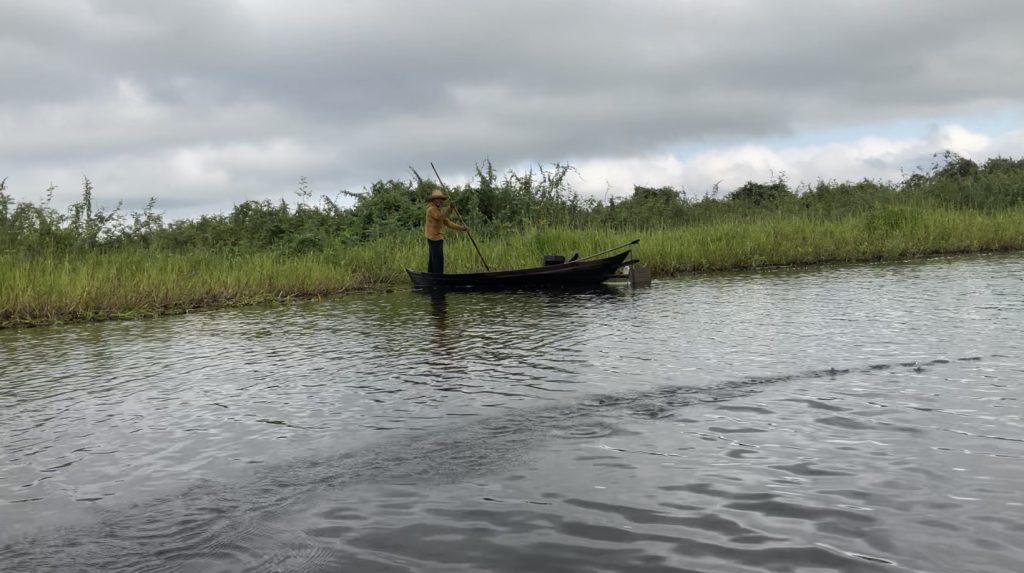
The clearing of a thousand hectares of peatland as part of the New Order government’s food self-sufficiency policy has changed many aspects of the swamp ecosystem. The Banjar community living in the Barito River area has also experienced a huge impact, in line with their livelihoods, which are mostly dependent on nature. River fishermen dominate the types of work undertaken by the Banjar community in Jenamas, with an estimated 85% of the population being river fishermen. This large number has formed a relationship between species, namely the residents of Jenamas and freshwater fish. This relationship between species includes efforts to resist the consequences of needs, interests, and policy manifestations that have occurred. Fishermen and freshwater fish work together with the primary goal of sustaining their lives. This collaborative effort directly involves the swamp as a dynamic space, so that the results of this collaboration also include maintaining and repairing the balance of the swamp ecosystem so that both fishermen and freshwater fish can continue to live. The more-than-human ethnography framework was used in our study to conduct research—uncovering all the relationships and symbols of connection between humans and freshwater fish. This research, fully funded by the RKAT Department of Cultural Anthropology, FIB UGM, was conducted over one and a half months in Jenamas Subdistrict, Barito Selatan District, Central Kalimantan.

*Beje = Fish ponds in the middle of the field can only be harvested during the dry season.

Author: Syahira Faidha Rachmawati
 

Leave A Comment Cancel reply

Your email address will not be published. Required fields are marked *

*

This site uses Akismet to reduce spam. Learn how your comment data is processed.

Related Posts

Visiting Lecture: Ageing and Digital Welfare on the German-Polish Border

AcademicsNews Friday, 13 March 2026

Department of Anthropology Universitas Gadjah Mada invites all academic civitas to join the visiting lecture from Dr. Katharina Schneider (Katholische Hochschule für Sozialwesen Berlin) titled “Ageing and Digital Welfare on the German-Polish Border”

The lecture will be held on Wednesday, April 1st, 2026, from 15.00 to 16.30 WIB at Room Soegondo 709, Faculty of Cultural Sciences, Universitas Gadjah Mada. This event is open to the public, and students are highly encouraged to attend.

Abstract:
How do older adults perceive, evaluate and participate in efforts at digitalizing public services, especially those that are meant to support them in ageing well? Recent research, both on older adults as (non-)users of technology and on digital welfare, challenges the assumption that digitalization would provide an easy solution to population ageing, and to the economic, political and social challenges associated with it.

Visiting Lecture “Global China and Infrastructure Power: the technopolitics of the ‘China Model’ of development”

Workshop Monday, 9 March 2026

Departemen Antropologi Universitas Gadjah Mada mengundang seluruh sivitas akademik UGM untuk mengikuti Visiting Lecture Prof. Dr. Timothy Oakes (Dept. of Geography, University of Colorado Boulder) dengan topik “Global China and Infrastructure Power: the technopolitics of the ‘China Model’ of development”.

Visiting lecture akan diselenggarakan pada Kamis, 28 Mei 2026 pukul 15.30 to 17.00 WIB bertempat di Ruang Soegondo 709, Fakultas Ilmu Budaya UGM.

Acara ini terbuka untuk umum, mahasiswa dipersilakan untuk ikut bergabung.

Abstract:

China’s expansive engagements beyond its borders over the past decade have resulted in increased scholarly attention to the idea of ‘global China.’ While there is a broad range of activities inherent in this term – including construction investments, digital technologies, development finance, and soft-power projects – popular conceptions of global China tend to focus on the signature policy initiative of the Xi administration: the Belt & Road (BRI).

Academic Briefing for Master’s Students in Anthropology 2026

AcademicsS2 Tuesday, 3 February 2026

The Department of Anthropology invites all students of the Master’s Program in Anthropology to attend the Master’s Program in Anthropology Student Meeting 2026.

Call for Participants: Summer School in Southeast Asia The New Orientalism, Understanding the Paradoxes of Mass Tourism in Southeast Asia

AcademicsResearch Scholarship Friday, 30 January 2026

“The New Orientalism: Understanding the Paradoxes of Mass Tourism in Southeast Asia,” will explore the complex rise and consequences of large-scale tourism in the region.

Latest News

  • Visiting Lecture: Ageing and Digital Welfare on the German-Polish Border
    13 March 2026
  • Visiting Lecture “Global China and Infrastructure Power: the technopolitics of the ‘China Model’ of development”
    9 March 2026
  • Academic Briefing for Master’s Students in Anthropology 2026
    3 February 2026
  • Call for Participants: Summer School in Southeast Asia The New Orientalism, Understanding the Paradoxes of Mass Tourism in Southeast Asia
    30 January 2026
  • New Class Announcement: Reflecting your Life – a turn towards Social Theory!
    26 January 2026
Universitas Gadjah Mada

Department of Anthropology

Faculty of Cultural Sciences

Universitas Gadjah Mada

Related Pages

  • Universitas Gadjah Mada
  • Admission UGM
  • Faculty of Cultural Sciences UGM
  • Office of International Affairs UGM
  • Library UGM
  • SIMASTER UGM
  • Site Map

© 2024 Department of Anthropology FIB UGM